Table of contents
Forestry management continually calls for innovative solutions to tackle evolving environmental and operational challenges. Mulchers and chippers have emerged as dynamic tools, offering unmatched flexibility for land clearing, debris reduction, and ecosystem maintenance. Delve into the following sections to uncover how these machines are transforming forestry practices and advancing sustainability goals.
Understanding mulchers in forestry
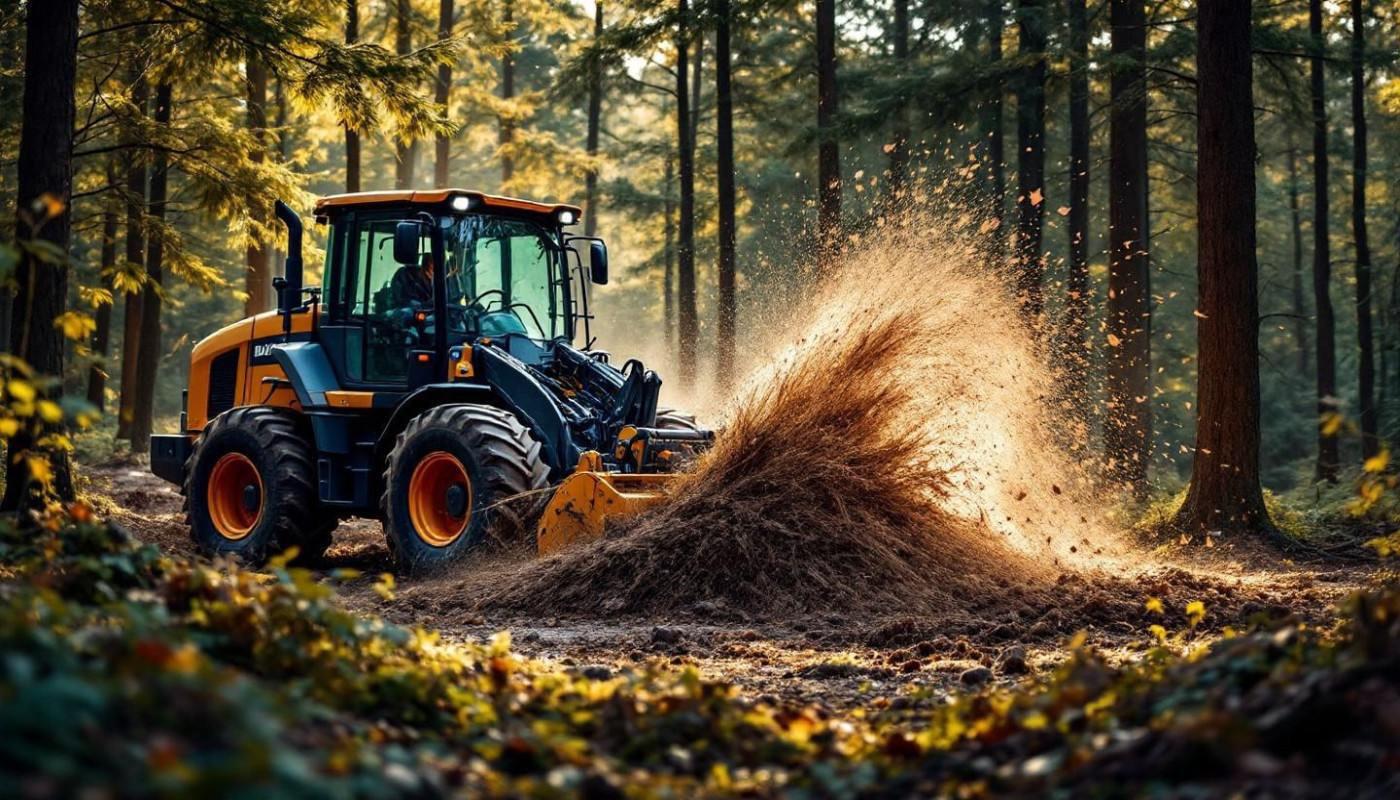
Within forestry management, mulchers serve as indispensable forestry equipment, expertly designed for efficient land clearing and underbrush management. Their primary function revolves around breaking down dense vegetation and organic debris through the advanced mulching process, where a powerful rotor drum mechanism shreds plant material into fine mulch. This not only accelerates vegetation control, but also plays a pivotal role in reducing fire hazards by eliminating dry undergrowth that could fuel wildfires. According to leading forestry equipment specialists, the rotor drum's ability to process large volumes of biomass ensures rapid site preparation, making mulchers highly effective for ecological restoration projects. By transforming unwanted brush into nutrient-rich mulch, these machines support the regeneration of native habitats while minimizing soil disturbance and erosion during land clearing operations.
Roles of chippers in operations
Chippers play a pivotal part in modern forestry management by transforming bulky branches and logs into uniform wood chips, greatly enhancing wood chipping efficiency and debris management. Through the use of a feed chute, operators safely and quickly process material, enabling seamless branch removal during thinning, harvesting, or post-storm cleanup. This process not only clears forest sites but creates a reliable feedstock for biomass production, allowing chipped material to serve as a renewable energy source or organic input for composting and soil restoration. The adaptability of chippers ensures that even remote or challenging sites can be prepared for reforestation or further silvicultural interventions without excessive manual labor.
Utilizing chippers in sustainable forestry supports ecological goals by minimizing waste and converting potential fire hazards into value-added products. In practice, wood chipping assists with site preparation by reducing the volume of woody debris, facilitating safer and faster access for crews and equipment. These machines are engineered for high throughput, and by employing the right settings on the feed chute, operators can optimize chip size for various end-uses, whether for industrial biomass, landscaping mulch, or habitat improvement. For a closer look at advanced solutions and equipment suited to diverse forestry needs, see it here.
Comparing mulchers and chippers
When considering forestry machinery for land management, understanding the distinct applications of mulchers and chippers can significantly enhance operational efficiency. Mulchers are designed to break down vegetation, brush, and even small trees into fine mulch, spreading the processed material evenly across the ground. This approach is highly beneficial for reducing soil erosion, improving nutrient cycling, and supporting rapid site rehabilitation, making mulchers particularly effective in maintaining trails, utility corridors, and wildfire prevention zones. In contrast, chippers excel at converting larger branches and cut trees into wood chips of varying output sizes, which can then be used as biomass fuel, landscaping material, or raw input for manufacturing processes. The ability to adjust output size allows chippers to meet specific project requirements, providing flexibility in end use.
The advantages of mulchers lie in their capability to process material in place without the need for removal or further handling, which minimizes soil disturbance and lowers transportation costs. This makes them ideal for projects where on-site residue management is a priority. Chippers, on the other hand, are preferred when the end goal is to remove woody debris from the site or convert it into a marketable product. Their efficient feed mechanisms and adjustable output size contribute to a streamlined workflow, especially in commercial logging or urban tree removal operations. Equipment comparison demonstrates that while mulchers support ecological restoration and rapid ground cover, chippers contribute to resource recovery and waste reduction in different settings.
Despite these strengths, both types of forestry machinery have limitations. Mulchers may struggle with very dense or oversized material, potentially requiring pre-processing with other equipment, and they can sometimes leave uneven residue that may require follow-up grading. Chippers, meanwhile, are less effective with smaller brush or leafy material and typically demand more labor to feed and operate efficiently. Operators must consider the environmental impact of both machines: mulchers often promote habitat regeneration and carbon sequestration, while chippers help divert green waste from landfills but can increase fuel use if frequent transport is needed. Selecting between a mulcher and a chipper depends on site conditions, desired output size, and overall management objectives, underscoring the necessity for tailored equipment comparison in every forestry project.
Promoting sustainable land practices
Integrating mulchers and chippers into forestry operations significantly advances sustainable land use by transforming biomass residue into valuable resources rather than waste. These machines are instrumental in habitat conservation, enabling careful undergrowth management without resorting to destructive clearance methods that can disrupt ecological balance. The senior environmental analyst emphasizes that, when properly employed, mulchers and chippers reduce the need for open burning—a practice that contributes to air pollution and carbon emissions—by converting debris into mulch or wood chips suitable for soil enrichment or bioenergy production. This process aids resource recycling, as it returns nutrients to the forest floor and fosters the regeneration of native species. In turn, the adoption of such green technology not only promotes healthier forest ecosystems but supports long-term sustainability goals integral to responsible forestry management.
Emerging trends in forestry equipment
Forestry technology has witnessed rapid development with equipment innovation shaping the future of mulchers and chippers. Automation trends are transforming traditional machines into highly efficient, intelligent tools equipped with advanced control systems and precision operation capabilities. Modern mulchers and chippers now often include telemetry systems, enabling real-time data collection and diagnostics. These telemetry systems allow operators and managers to remotely monitor machinery performance, track fuel usage, and schedule predictive maintenance, all contributing to increased uptime and lower operational costs. Remote monitoring also enhances safety by providing instant alerts on potential malfunctions or hazardous conditions, ensuring a safer work environment in challenging forestry settings.
Fuel efficiency has become a priority as the sector addresses both environmental concerns and rising operational expenses. Recent equipment models utilize optimized engines, hybrid systems, and energy recovery technologies to reduce fuel consumption without sacrificing power or productivity. At the same time, innovations in sensor technology and connectivity support seamless integration with fleet management software, making it easier to coordinate multiple machines across expansive forestry sites. As automation and digital connectivity continue to advance, the future of forestry equipment lies in smarter, more sustainable machines that deliver precise results while minimizing ecological impact.
Similar
